5 Places To Visit In South Korea
Gwangalli Beach (광안리해수욕장)
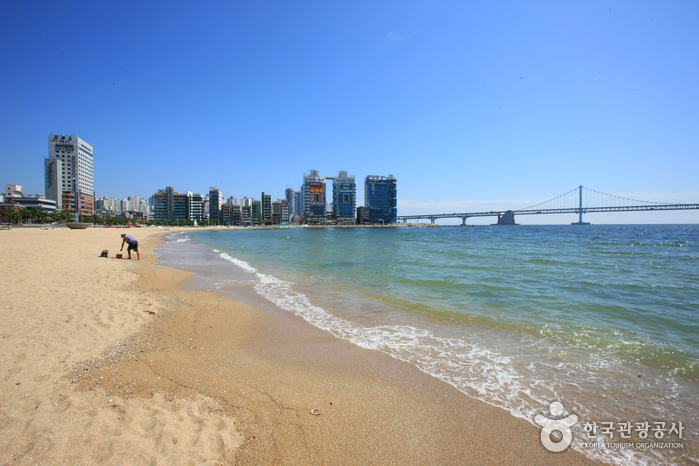
Gwangalli
Beach (광안리해수욕장) is
1.4 km long, 64m wide, and is famous for its fine sand. This area has undergone
a water cleaning program, and as a result, the water of the beach is pristine.
The clean waters of this area also attract many fishermen. You can prepare raw
fish dishes on the spot, right after you have caught the fish. For those
looking for some action, there is the Olympic Yacht Rental where you can rent
yachts. You can also enjoy water-skiing, jet skiing, windsurfing, and other
exciting water sports. On the beach there is an outer concert stage where the
Busan Ocean Festival and other various events are held. The area has a cultural
center, a museum, theaters for plays and movies, an art gallery, TV station,
and famous Korean and non-Korean fashion brand name shops. It is a popular
gathering place for young
Admission
Fees:
Free
Taebaek Guwau Village (Alpine Botanical Garden) (태백 구와우마을(고원자생식물원))

Guwau
Village is located below Pijae Hill (also called Samsuryeong) at the entrance
to Maebongsan Mountain. The village got its name because its topography
resembles the scenery of nine cows peacefully lying around. The Alpine
Botanical Garden is located 800-900 meters above sea level and protects the
endangered alpine plant species from disappearing.
The
botanical garden also offers visitors an opportunity to conveniently observe
some rare flowers and plants. In August, when the sunflowers are in full bloom,
the Taebaek Sunflower Festival is held at Guwau Village. In addition to
celebrating the area’s wide array of colorful flowers, the festival also has a
variety of attractions such as a drawing exhibition, a photo exhibition, and an
environmental sculpture exhibition using repurposed materials.
Admission
Fees [Highlands Botanical Garden]
Adult 5,000
won / Student 3,000 won
Group (30
persons and more) 3,000 won
Naksan Beach (낙산해수욕장)
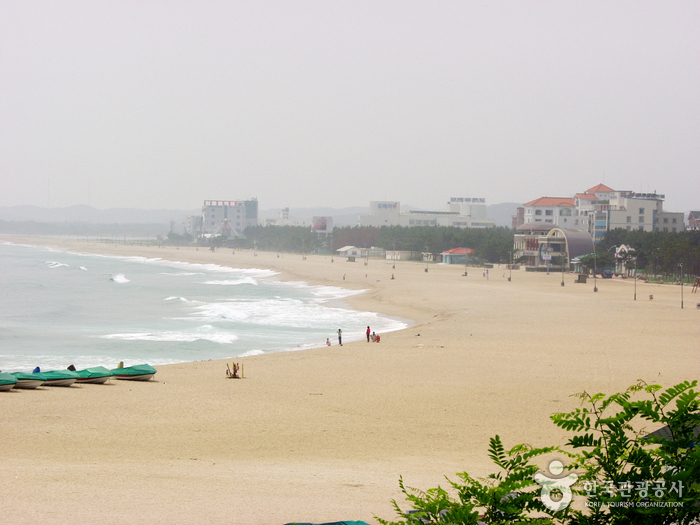
Since its
opening in 1963, this beach, out of the other 3 beaches in Donghaean (East
Coast) continues to have a great number of visitors every summer. Dense pine
tree forests, 4 km of white sands, and shallow waters of 1.5m ~ 70m are
characteristic of this beach.
Also,
Naksansa Temple, one of the eight beautiful sights of the Gwandong area
(Gwandongpalgyeong), and the Uisangdae tourist attractions surround this beach,
making it even more attractive to visitors. The beautiful four seasons of
Seoraksan Mountain can be witnessed in just 10 min. by car, and one can taste
delicious seafood at Jeonjinhang, only a 5 min. car ride away.
Admission
Fees
Free
Buseoksa Temple (부석사)
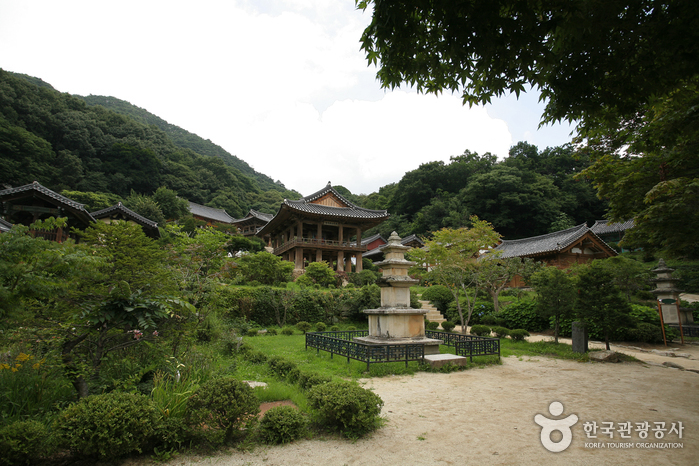
Buseoksa
Temple is considered a 'masculine' temple. It differentiates itself from other
temples by its huge size and the scenery is refreshing and beautiful. Buseoksa
Temple was built in 676, when King Munmu (661~681) ruled the Silla Dynasty (57
B.C. ~ A.D. 935), by the founder Uisang (625~702) after he received orders from
the King. Later in the 7th year (1016) of the Goryeo Dynasty (918~1392) was in
the reign of King Hyeonjong (reign 1010 to 1031) Great Buddhist Monk Wonyung
(964~1053) renovated Muryangsujeon (National Treasure No.18). It was renovated
several times afterwards.
The legend
of lady Seonmyo and Uisang is famous. The two met when Priest Uisang went to
Dang (Dynasty of China) to study. When Uisang told Seonmyo he would go back to
his country, Seonmyo jumped into the sea and drowned. After death, she became a
dragon. Seonmyo followed Uisang to Silla to protect and be with him. When
Uisang ran against a crowd that had gathered to stop him from building Buseoksa
Temple, Seonmyo brought up stones in the air three times. The stone that
floated stands on the left side of Muryangsujeon. Because a wide, flat stone
had floated above the ground, the temple was named Buseoksa Temple.
At the
entrance of Buseoksa you will see 108 steps between Cheonwangmun gate and
Anyangmun gate. The number of steps represents redemption from agony and evil
passions through 108 cycles. You will find Buseoksa Temple's Three Story Tower
when you pass the Iljumun and Cheonwangmun gates. Above the tower you will see
Beomjongru. When you pass Beomjongru, you can see a pavilion called Anyang,
which means 'entrance to Heaven'. Go past Anyang Pavillion and you will reach
the main building of Buseoksa Temple, Muryangsujeon, which boasts beautiful
curved lines of the building structure.
Muryangsujeon
is a wooden building made in the Goryeo Dynasty. Inside you will find National
Treasure No.45, Sojo Yeorae Seated Figure. There are more National Treasures
and relics inside such as the Josadang (National Treasure No.19), Josadang Wall
Painting (National Treasure No.46) and the Stone Lantern (National Treasure
No.17) in front of Muryangsujeon.
Admission
Fees
Adults:
1,200 won / Group: 1,000 won
Youths:
1,000 won / Group: 800 won
Children:
800 won / Group: 500 won
Everland (에버랜드)
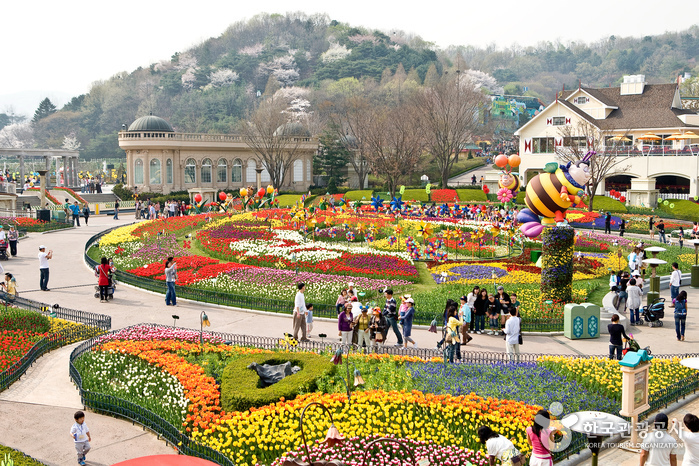
Everland
Resort was opened in 1976 as the first family park in Korea. Though originally
called ‘Yongin Jayeon Nongwon,’ the company changed its name to ‘Everland’ to
make the name more recognizable to international audiences. The park is home to
over 40 heart-pounding rides and attractions. In addition to ‘Safari World’
featuring white tigers, tigers, lions and bears, ‘Herbivore Safari’ opened in
April 2010, letting visitors get up close and personal with the safari’s
giraffes, elephants, and ostriches. Everland is also known for its gorgeous
flower arrangements and beautiful gardens, which have been year-round fixtures
since the Rose Festival in 1985. Other great spots for family fun are the Snow
Sled (the first and the longest of its kind in Korea), Caribbean Bay (an
outstanding water park) and Everland Speedway (a racing track). Full of
exciting attractions and entertainment, Everland is one of the most popular
places in Korea for families, friends, and couples.
Admission Fees
* One-day Pass
- Daytime: Adults 40,000 won / Teenagers 34,000 won / Children 31,000 won
- Nighttime: Adults 33,000 won / Teenagers 28,000 won / Children 25,000 won
* Two-day Pass
Adults: 64,000 won / Teenagers: 55,000 won / Children: 50,000 won
* Admission Ticket
- Daytime: Adults 33,000 won / Teenagers 28,000 won / Children 25,000 won
- Nighttime: Adults 26,000 won / Teenagers 24,000 won / Children 22,000 won
* Children: ages 36 months-12 / Teenager: ages 13-18
* Nighttime tickets are available starting from 17:00.
Admission Fees
* One-day Pass
- Daytime: Adults 40,000 won / Teenagers 34,000 won / Children 31,000 won
- Nighttime: Adults 33,000 won / Teenagers 28,000 won / Children 25,000 won
* Two-day Pass
Adults: 64,000 won / Teenagers: 55,000 won / Children: 50,000 won
* Admission Ticket
- Daytime: Adults 33,000 won / Teenagers 28,000 won / Children 25,000 won
- Nighttime: Adults 26,000 won / Teenagers 24,000 won / Children 22,000 won
* Children: ages 36 months-12 / Teenager: ages 13-18
* Nighttime tickets are available starting from 17:00.

Tidak ada komentar:
Posting Komentar